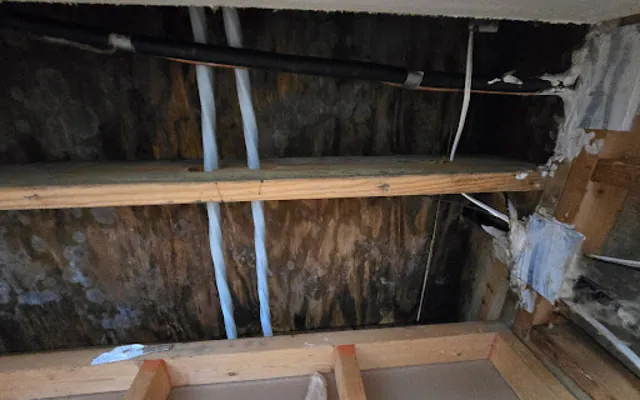
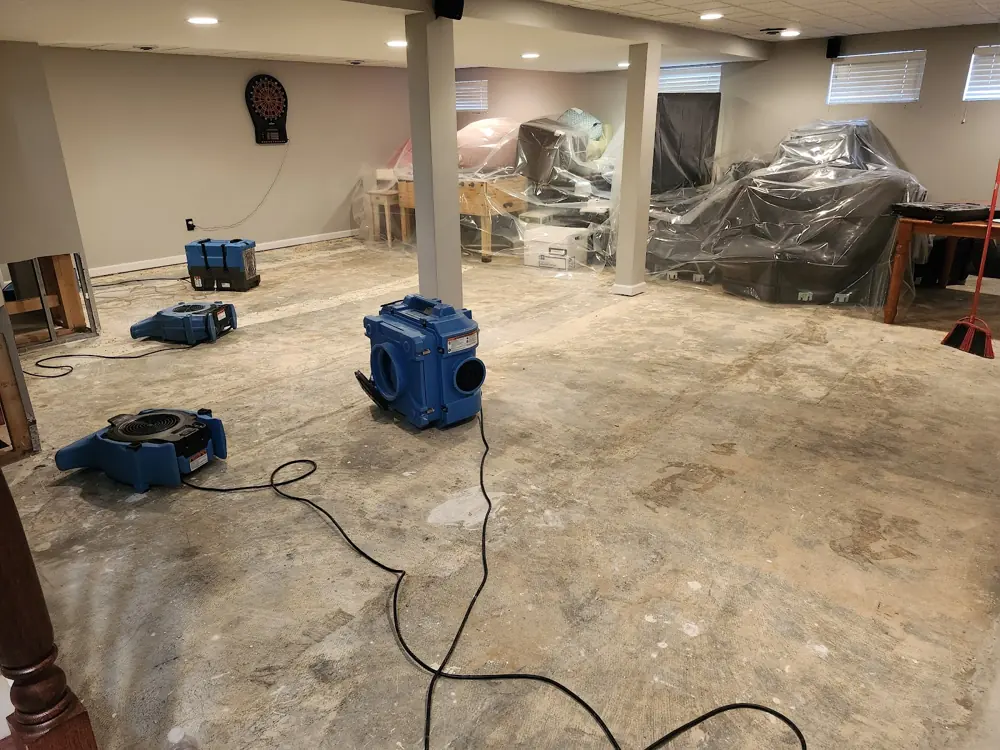
True ice dams are essentially unheard of on the coast, but backed-up water at the roofline from clogged gutters and debris during a heavy storm can cause the same kind of intrusion under shingles. TipTop Beach responds in about an hour with IICRC-standard drying crews.

Crews inspect gutters, drainage, and the roof edge to identify where water backed up and forced its way under shingles or tile.
Standing water above the ceiling and in attic insulation near the affected eave is extracted before drying begins.
Air movers and dehumidifiers dry the roof deck, insulation, and ceiling cavity, monitored daily until moisture is safe.
Crews repair ceiling and insulation damage and recommend gutter cleaning or a drainage fix to prevent the same backup next storm.

While help is on the way, these first steps, done only where it is safe, limit the damage and protect the insurance claim.
Shut the supply off at the source, or close the home's main valve if the source is not obvious. Stopping the flow limits the damage more than anything else.
Switch off electricity to the affected area, but only if the breaker can be reached without standing in or touching the water.
Get a crew dispatched right away. The sooner extraction and drying begin, the more flooring, drywall, and belongings can be saved.
Take photos and a short video of the water and the affected rooms before anything is moved, so the insurance claim starts strong.
Roofline water backup cleanup in Huntington Beach usually runs $500 to $4,000, depending on how much ceiling and insulation was affected near the eave. Since true ice is not involved locally, the fix is often as much about clearing gutters and improving drainage as it is about drying and repairing the interior damage.
Crews reach Huntington Beach and the Orange County coast fast, from Downtown Huntington Beach and Huntington Harbour to Sunset Beach, Southeast Huntington Beach, and nearby Fountain Valley and Westminster. See the full list on the areas served across Huntington Beach page.
See all areas servedEvery loss is photographed, measured, and logged from the first visit, so the paperwork holds up with your insurance carrier.
Technicians follow recognized IICRC drying standards and prove the work with daily moisture readings, not guesswork.
Emergency dispatch any hour of the day or night, with a real crew on the way, not a callback in the morning.
A real crew dispatched any hour, not a callback in the morning.
Trained technicians following recognized IICRC drying standards.
Truck-mounted, portable, and submersible for any size loss.
The loss is documented and billed to the carrier directly.
Essentially never in the true sense, since that requires sustained snow accumulation on a roof, which the coastal climate does not produce. What homeowners sometimes describe as an ice dam here is usually water backed up at the roofline by clogged gutters or debris during a heavy storm, with the same kind of damage but no ice involved.
A regular roof leak often comes from a single failed point like a cracked tile or bad flashing. This kind of backup happens along a stretch of the roofline where water pools and is forced upward under shingles or tile, so the affected area is often wider and closer to the eave or a low-slope section.
Keeping gutters and downspouts clear of palm fronds and debris before storm season, and making sure any low-slope roof sections drain properly, addresses the local version of this problem directly. A roofing contractor can also flag any spots where water tends to pool.
Sudden water intrusion during a specific storm event is often covered similarly to a roof leak. Damage from gutters that were visibly clogged and neglected for a long time may raise maintenance questions, so keeping up with gutter cleaning also helps protect your claim.
Huntington Beach crews are on call 24 hours a day, local and fast, and can be on the way within the hour.
Call (949) 670-2603