Older swamp cooler leaking into your Huntington Beach attic or ceiling? TipTop Beach responds in about an hour, IICRC-standard, to extract water and dry the space fast.

Crews locate the leak point at the cooler pan, float valve, or supply line and extract standing water from the attic or ceiling cavity.
Saturated insulation and ceiling drywall are assessed to determine what can be dried versus what needs removal.
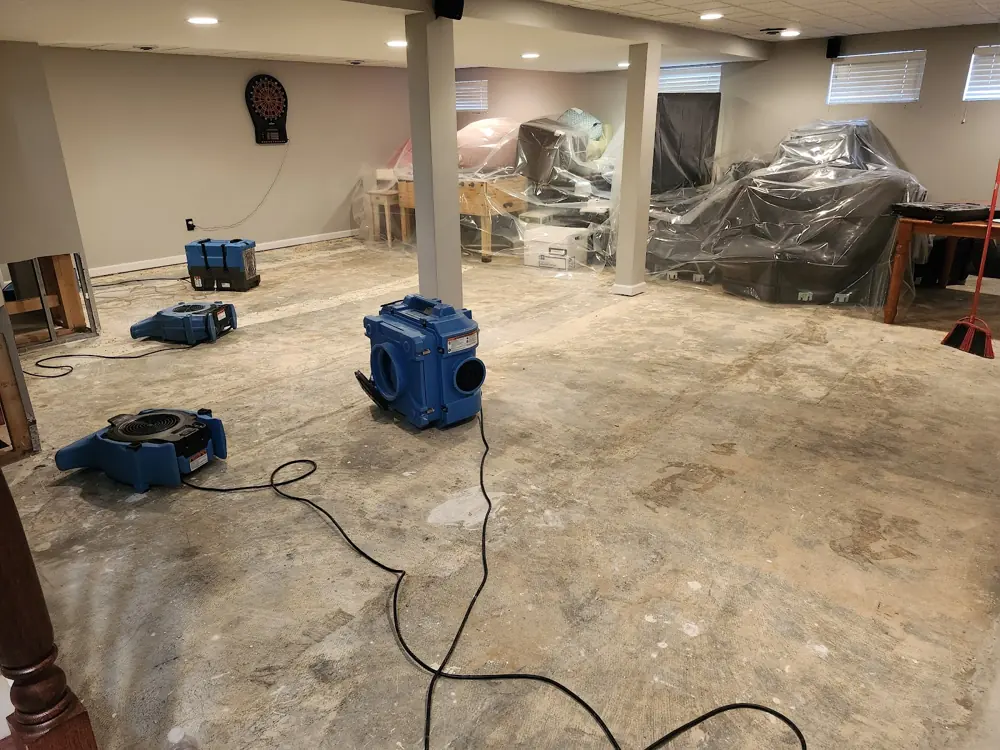
Dehumidifiers and air movers dry the attic and ceiling area until moisture readings return to normal.
Crews coordinate cooler repair or removal with an HVAC technician and rebuild any affected ceiling drywall and insulation.

While help is on the way, these first steps, done only where it is safe, limit the damage and protect the insurance claim.
Shut the supply off at the source, or close the home's main valve if the source is not obvious. Stopping the flow limits the damage more than anything else.
Switch off electricity to the affected area, but only if the breaker can be reached without standing in or touching the water.
Get a crew dispatched right away. The sooner extraction and drying begin, the more flooring, drywall, and belongings can be saved.
Take photos and a short video of the water and the affected rooms before anything is moved, so the insurance claim starts strong.
Swamp cooler leak water damage cleanup in Huntington Beach typically runs $500 to $3,500, depending on how much ceiling drywall and attic insulation were affected before the leak was noticed. Sudden float valve or pan failures are often covered by homeowner's insurance, and crews document the cause to support your claim.
Crews reach Huntington Beach and the Orange County coast fast, from Downtown Huntington Beach and Huntington Harbour to Sunset Beach, Southeast Huntington Beach, and nearby Fountain Valley and Westminster. See the full list on the areas served across Huntington Beach page.
See all areas servedEvery loss is photographed, measured, and logged from the first visit, so the paperwork holds up with your insurance carrier.
Technicians follow recognized IICRC drying standards and prove the work with daily moisture readings, not guesswork.
Emergency dispatch any hour of the day or night, with a real crew on the way, not a callback in the morning.
A real crew dispatched any hour, not a callback in the morning.
Trained technicians following recognized IICRC drying standards.
Truck-mounted, portable, and submersible for any size loss.
The loss is documented and billed to the carrier directly.
Not really. The coastal marine layer keeps humidity high enough that evaporative cooling works poorly near the coast, so most Huntington Beach homes use standard air conditioning. Swamp coolers do occasionally show up on older inland-adjacent tract homes or workshops.
A stuck float valve that keeps filling the unit past capacity, a cracked or corroded pan, or a clogged supply line are the most common causes. Because these units sit on a roof or in an attic, a leak sends water directly into insulation and ceiling drywall.
Sudden mechanical failures like a stuck valve or cracked pan are often covered under standard homeowner's policies. Damage from a unit that was known to be leaking for a long time without repair may be treated as a maintenance issue.
Given how rarely they are needed in Huntington Beach's coastal climate, many homeowners choose to remove an aging unit rather than keep maintaining one. Crews can coordinate that removal alongside the water damage repair if you go that route.
Most attic sections dry within four to six days with dehumidifiers and air movers running continuously. Crews track moisture daily and only close up the ceiling once readings confirm the insulation and framing are safe.
Huntington Beach crews are on call 24 hours a day, local and fast, and can be on the way within the hour.
Call (949) 670-2603